I still remember the first time I tried to buy crypto. I had heard about Bitcoin everywhere — friends were talking about it, YouTube was flooded with videos, and even people who barely use smartphones were suddenly asking “should I invest?”
So I decided to finally do it.
I opened some random exchange website, stared at the screen for ten minutes, saw words like “KYC verification,” “spot trading,” “order book,” and quietly closed the tab. Too confusing. Too scary.
That was my first attempt. I came back three days later, this time with patience — and honestly, it was way simpler than I thought. If you’re in that same spot right now, this guide is for you. No jargon overload. No fake hype. Just the real steps I wish someone had shown me from the beginning.
First, You Don’t Need a Lot of Money to Start
This is the biggest myth that stops most beginners. People think you need thousands of dollars to buy crypto. You don’t.
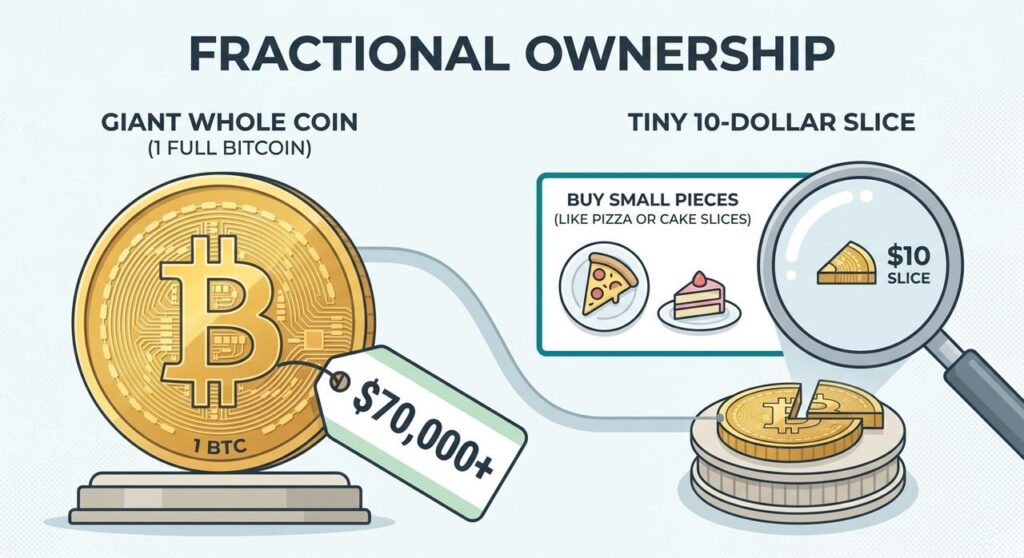
You can start with $10. Seriously. Most exchanges let you buy a fraction of Bitcoin or Ethereum. So don’t let “I don’t have enough money” be your excuse. Start small, learn the process, then scale up when you’re comfortable.
Step 1 — Choose a Reliable Exchange
An exchange is basically the platform where you buy, sell, and store crypto. Think of it like a bank — but for digital currencies.
For beginners in 2026, these are the most trusted options:
Binance — The largest crypto exchange in the world. Great for beginners and experienced traders both. Low fees, huge variety of coins, strong security. If you’re in most parts of Asia, Africa, or Europe, Binance works perfectly.
Coinbase — Very beginner friendly. Clean interface. Best if you’re in the US or Europe and want the simplest experience possible.
Kraken — Solid reputation, good security, good for people who want a slightly more advanced platform without being overwhelming.
My personal recommendation for most beginners? Binance. The app is smooth, fees are low, and the support for different countries is strong.
Step 2 — Create Your Account
Once you’ve picked your exchange, creating an account is straightforward. Here’s what the process looks like on most platforms:
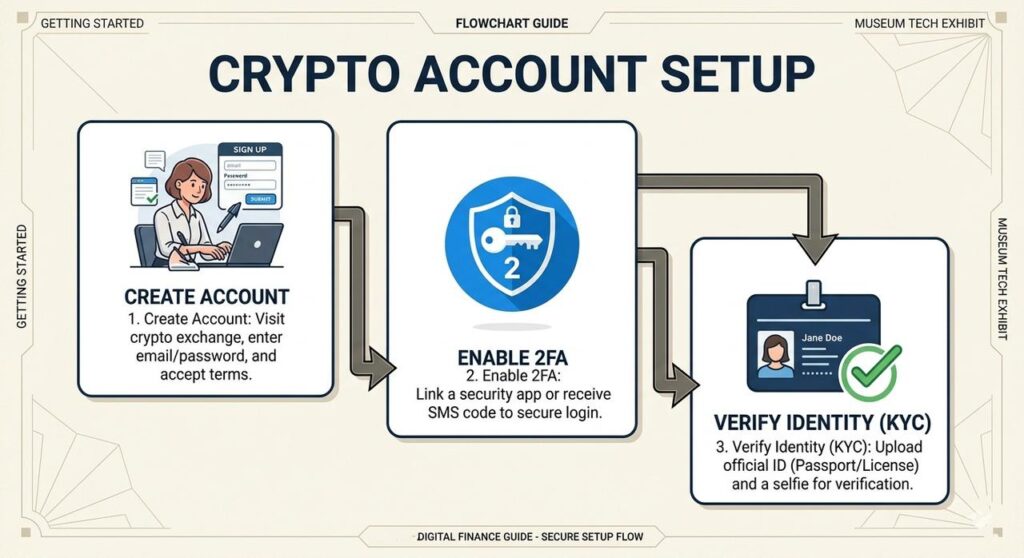
- Go to the official website or download the official app (always double-check the URL — fake exchange sites exist)
- Sign up with your email address
- Set a strong password — use a mix of letters, numbers, and symbols
- Enable two-factor authentication (2FA) immediately — this is not optional, this is your security shield
- Complete KYC verification — this means submitting your ID (passport, national ID, or driving license) and sometimes a selfie
KYC sounds annoying, I know. But it protects you. Exchanges that skip KYC are usually the shady ones you want to avoid.
Verification usually takes anywhere from a few minutes to 24 hours depending on the platform and how busy they are.
Step 3 — Add Money to Your Account (Deposit Funds)
After your account is verified, you need to add money before you can buy anything. This is called “depositing funds” or “on-ramping.”
Most exchanges accept:
- Bank transfer — Slowest but usually lowest fees
- Credit or debit card — Fast and easy but slightly higher fees
- P2P trading — You buy directly from another person on the platform, paying with your local currency
For beginners, card payment or P2P is the easiest route. Binance P2P is especially useful if you’re in a country where direct bank deposits aren’t supported.
One thing I learned the hard way — always check the fees before confirming. Card deposits can sometimes have a 1.5% to 3% fee on top. Not huge, but worth knowing.
Step 4 — Choose What to Buy
Now the fun part. What crypto should you actually buy?
Here’s my honest take:
If you’re a complete beginner, start with Bitcoin (BTC) or Ethereum (ETH). These are the two most established cryptocurrencies. They’ve been around the longest, they’re the most liquid, and they’re less volatile than smaller coins (though all crypto is volatile — don’t forget that).
Avoid chasing memecoins or random new tokens when you’re just starting. That’s a rabbit hole you’re not ready for yet. Get comfortable with the basics first.
To buy:
- Go to the “Markets” or “Trade” section on your exchange
- Search for Bitcoin (BTC) or Ethereum (ETH)
- Click “Buy”
- Enter the amount in your local currency (e.g., $20 worth of BTC)
- Review the order — check the amount, fees, and current price
- Confirm
Done. You’re now a crypto owner.
Step 5 — Understand Where Your Crypto Is Stored
When you buy crypto on an exchange like Binance, it stays in your exchange wallet by default. This is fine for beginners. It’s convenient and you can access it anytime.
But here’s something important to understand — when your crypto is on an exchange, technically the exchange holds the keys to it. If the exchange gets hacked or goes down (it has happened before with smaller platforms), there’s risk involved.
For small amounts while you’re learning — exchange wallet is totally fine.
For larger amounts — consider moving crypto to a personal wallet like MetaMask (software wallet) or a hardware wallet like Ledger. But that’s a topic for a separate guide. For now, just know the difference exists.
Common Mistakes New Buyers Make
I’ve seen these happen a lot — avoid them:
Buying out of FOMO — Bitcoin goes up 15% in a day, everyone’s excited, you panic buy at the top. Price drops the next day. Take your time. Don’t let hype drive your decisions.
Skipping 2FA — This is like leaving your house door unlocked. Always enable two-factor authentication.
Sending crypto to the wrong address — Crypto transactions are irreversible. If you send Bitcoin to an Ethereum address by mistake, it’s gone. Always double-check the address before confirming any transfer.
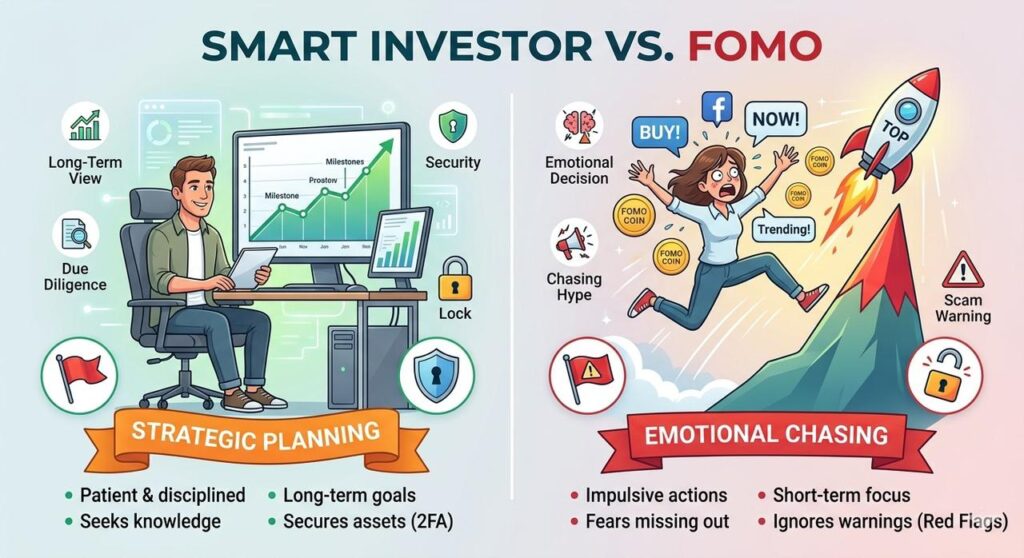
Trusting random “investment advice” on social media — If someone DMs you promising guaranteed returns or asking you to send crypto to “multiply” it, that’s a scam. 100% of the time.
Investing more than you can afford to lose — This isn’t dramatic advice, it’s realistic. Crypto markets are unpredictable. Only put in money you’re okay with losing completely.
How to Track Your Investment
Once you’ve bought your first crypto, you’ll naturally want to track its price. A few tools I use regularly:
- CoinGecko — Clean, reliable price tracker for thousands of coins
- CoinMarketCap — Similar to CoinGecko, widely used
- Binance app itself — If you bought on Binance, you can track directly in the app
Avoid obsessively checking prices every hour. It’ll stress you out. Crypto moves fast. Set a price alert instead and check weekly if you’re holding long term.
What Happens Next?
Buying your first crypto is just the beginning. Once you’re comfortable with the process, you can start exploring:
- How to read basic price charts
- What dollar-cost averaging (DCA) means and why it’s smart
- How airdrops work and how to find legitimate ones
- The difference between holding and trading
But don’t rush. The biggest advantage a beginner has is time. You’re learning now, before making big moves. That’s the smart way to do it.
The crypto space rewards patience and punishes panic. Keep that in mind from day one.
You Might Also Like
Financial Disclaimer: This article is for educational purposes only and does not constitute financial advice. Cryptocurrency investments are highly volatile and carry significant risk. Always do your own research before investing. Never invest more than you can afford to lose.

and content creator with over 5 years of
hands-on experience in blockchain technology
and digital assets. He actively trades and
researches crypto markets daily, and shares
insights with over 110,000 followers on
Binance Square. He founded CrypBuzz.com to
provide honest, research-backed crypto
education for everyday investors.